Leading UX for a new AAA co-op shooter from zero
Rainbow Six Extraction was a new IP spin-off — a co-op PvE game with no prior UX language. As UX Director, I had to establish a vision coherent across HUD, menus, progression, and onboarding, while aligning a team of designers across game design, art, and production.
Defining what Extraction's UX should feel like
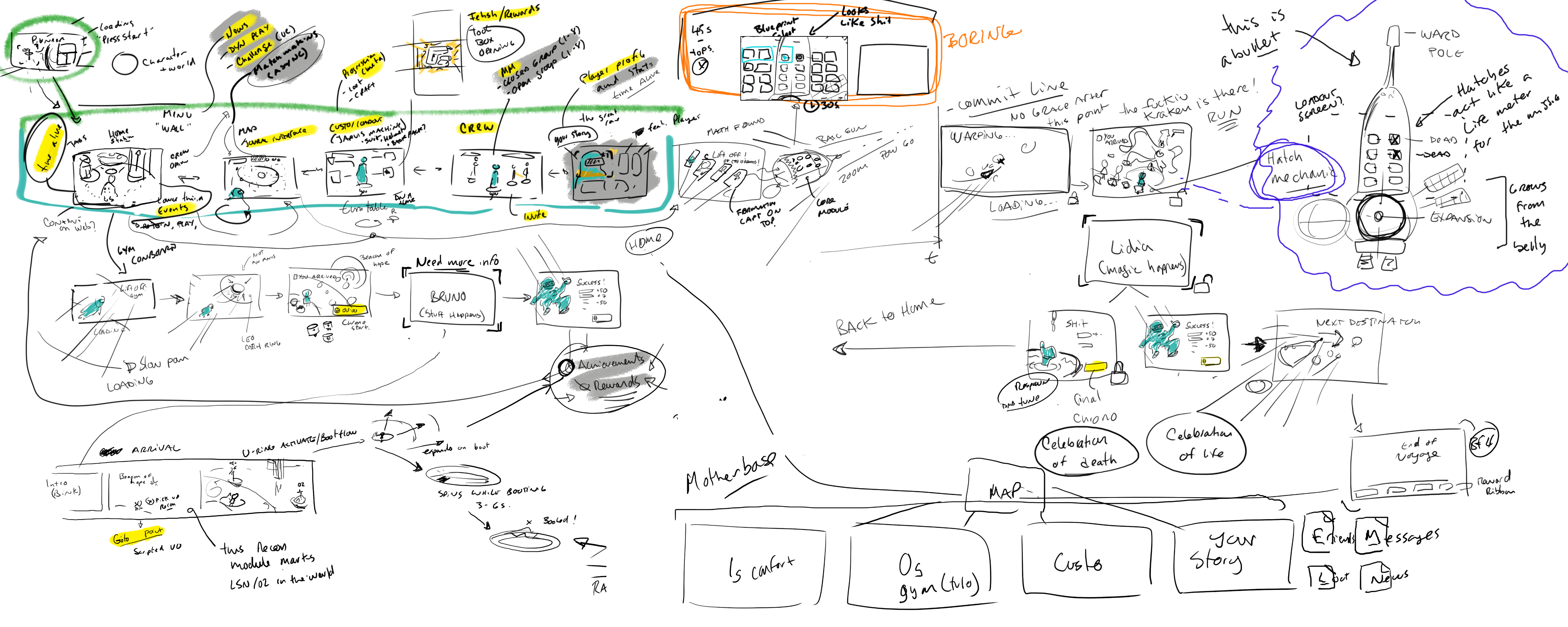
The first challenge: what should Extraction's UX feel like? Distinct from Siege's competitive UI, but grounded in the same brand. I led early explorations into HUD philosophy, progression readability, and the tension between co-op clarity and tactical atmosphere.
Setting standards and unblocking the team
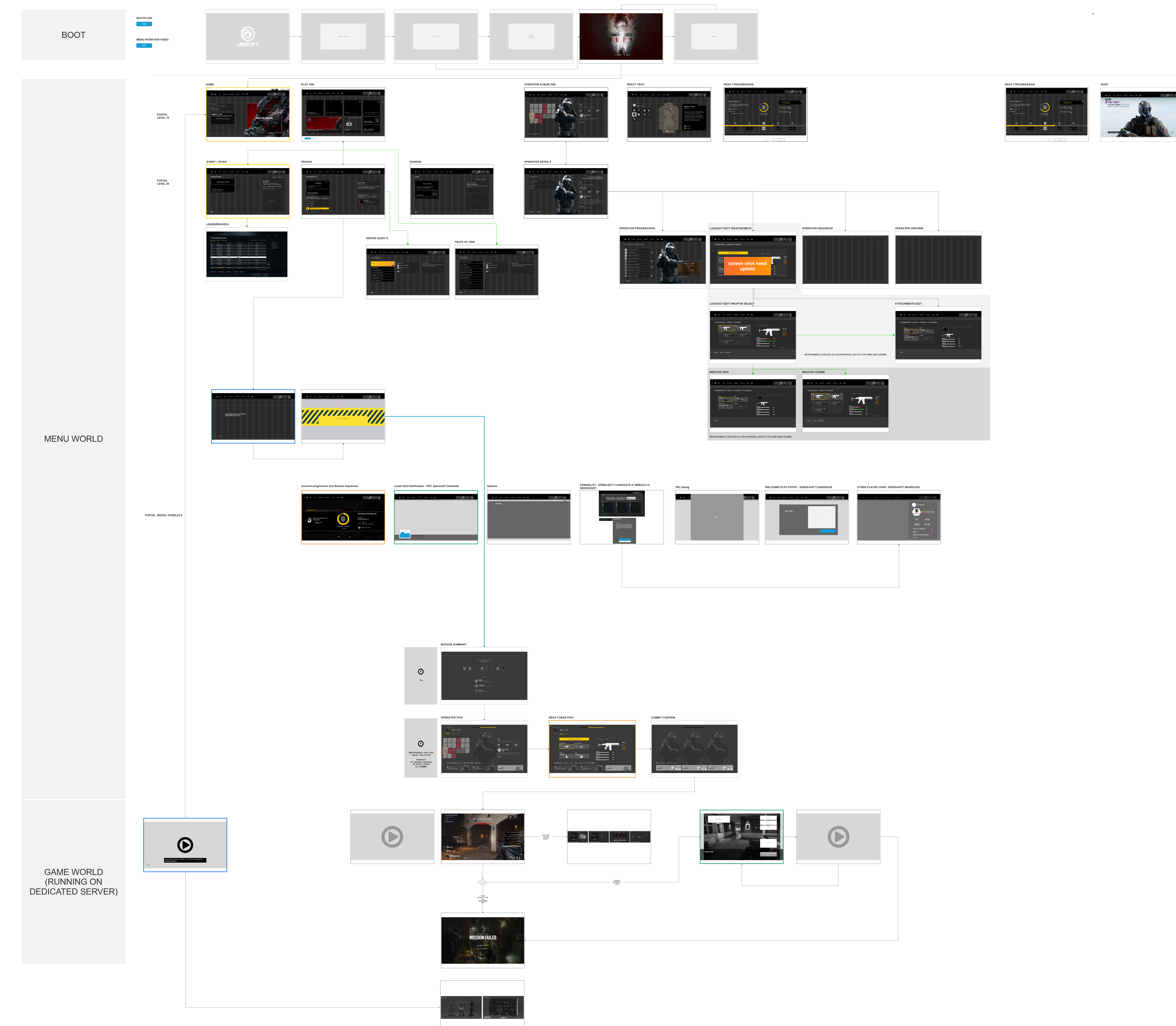
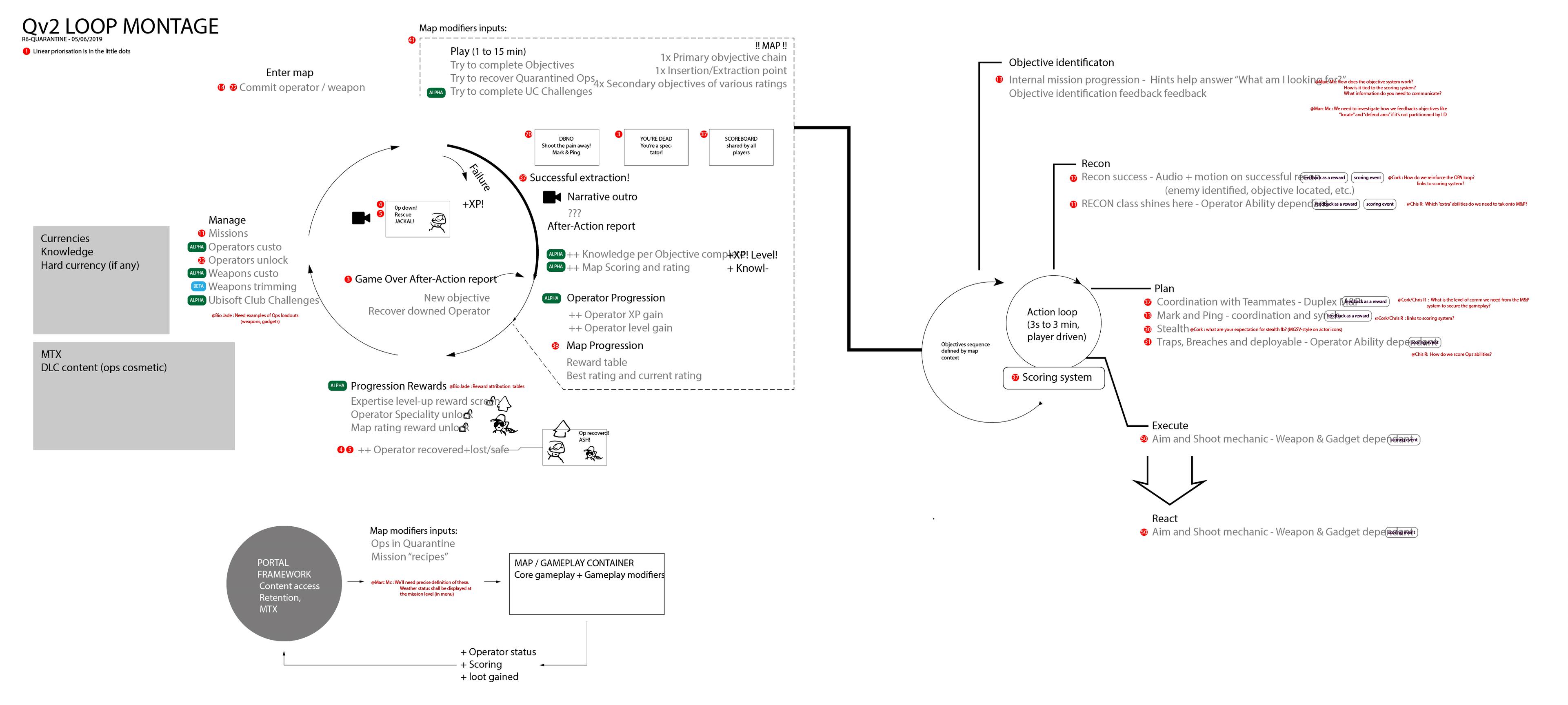
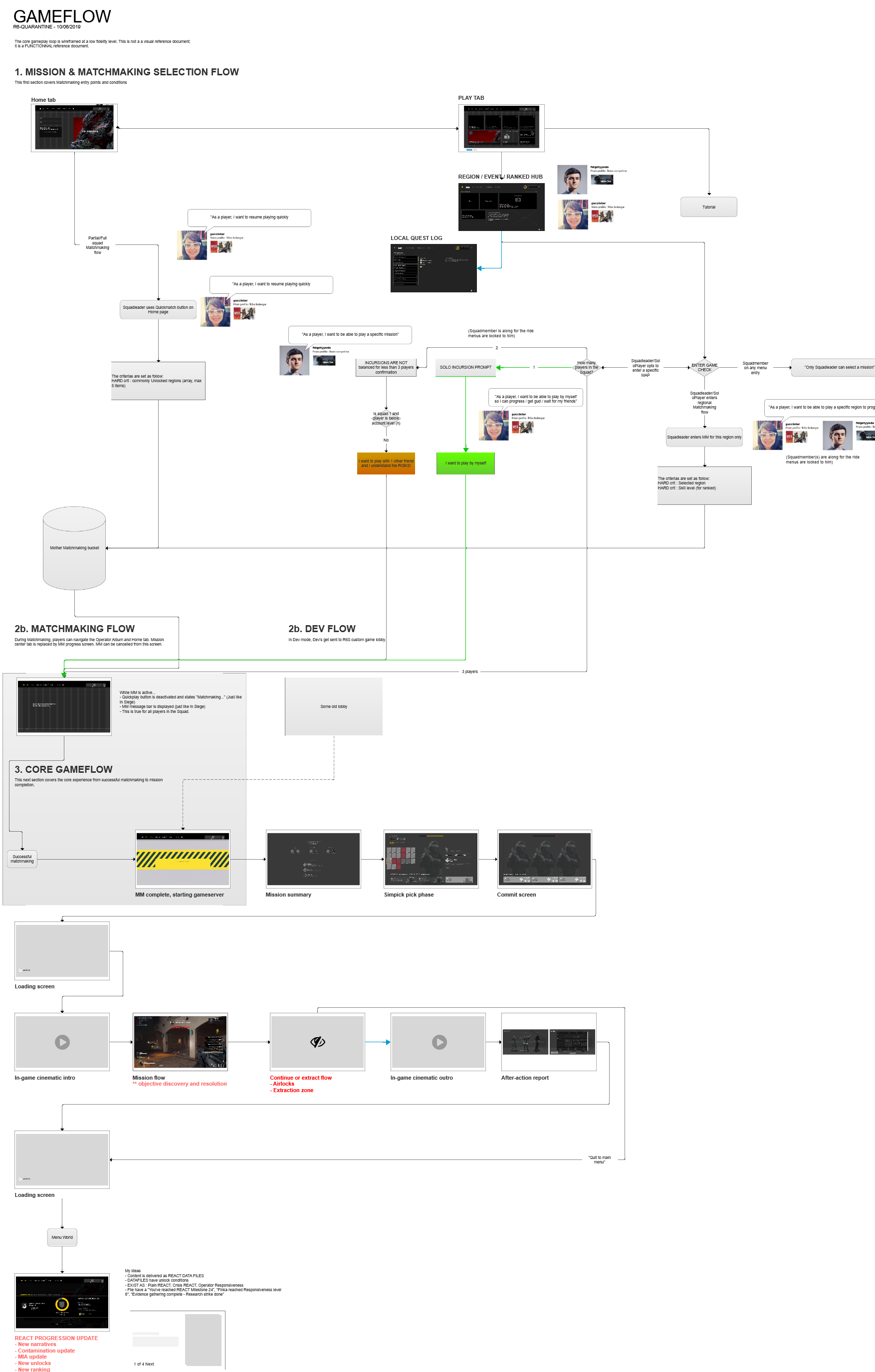
As one of the founding members of the Extraction team, there was no UX playbook to inherit. I had to build standards, methodology, and review process from the ground up. The game's central mechanic made this especially critical: a unique meta-loop where players managed a roster of operators progressively contaminated across failed incursions. Delivering that experience coherently required art, audio, UI, and game design to speak the same language at every moment of the player journey. To create that shared language, I mapped the full player experience, documenting what players would see, hear, and play in each situation across the entire game. That map became the backbone of my review process and the lens through which I read user research, ensuring every discipline was pulling in the same direction.
The value of that framework became concrete during a pivotal integration review. During excursions, players needed to locate operators lost in previous failed attempts, a moment that relied on a precise combination of audio cues, UI, and voiced dialogue working in concert. In the first integration, the layers were misaligned: audio told one story, VO used different terminology than the out-of-game messaging, and players had no clear read on what was happening. I caught it through gameplay capture sessions, running the core team through builds, timestamping moments of friction, and tracking required modifications against the journey map. The map gave me an immediate diagnostic framework: I could pinpoint exactly where the multi-sensory experience had broken down and which disciplines needed to realign.
That process, map, capture, timestamp, iterate, became the standard I established for how Extraction reviewed and resolved UX issues throughout production. In a game where the meta and in-game loops were tightly coupled and the team had been assembled from multiple prior projects, having a shared artifact that every discipline could read and reference was what made coherent delivery possible. It was not just a design tool. It was the connective tissue I put in place to keep a complex, multi-disciplinary production moving forward together.
Full UX ownership on a shipped AAA title
Extraction shipped in 2022 as Rainbow Six Extraction — a full AAA co-op experience with a coherent UX system across HUD, menus, and onboarding. My first director credit on a shipped title at this scale.